Things I Worked On

Things I Worked On
My Content Stream

Pages

Monday, 13 February 2017

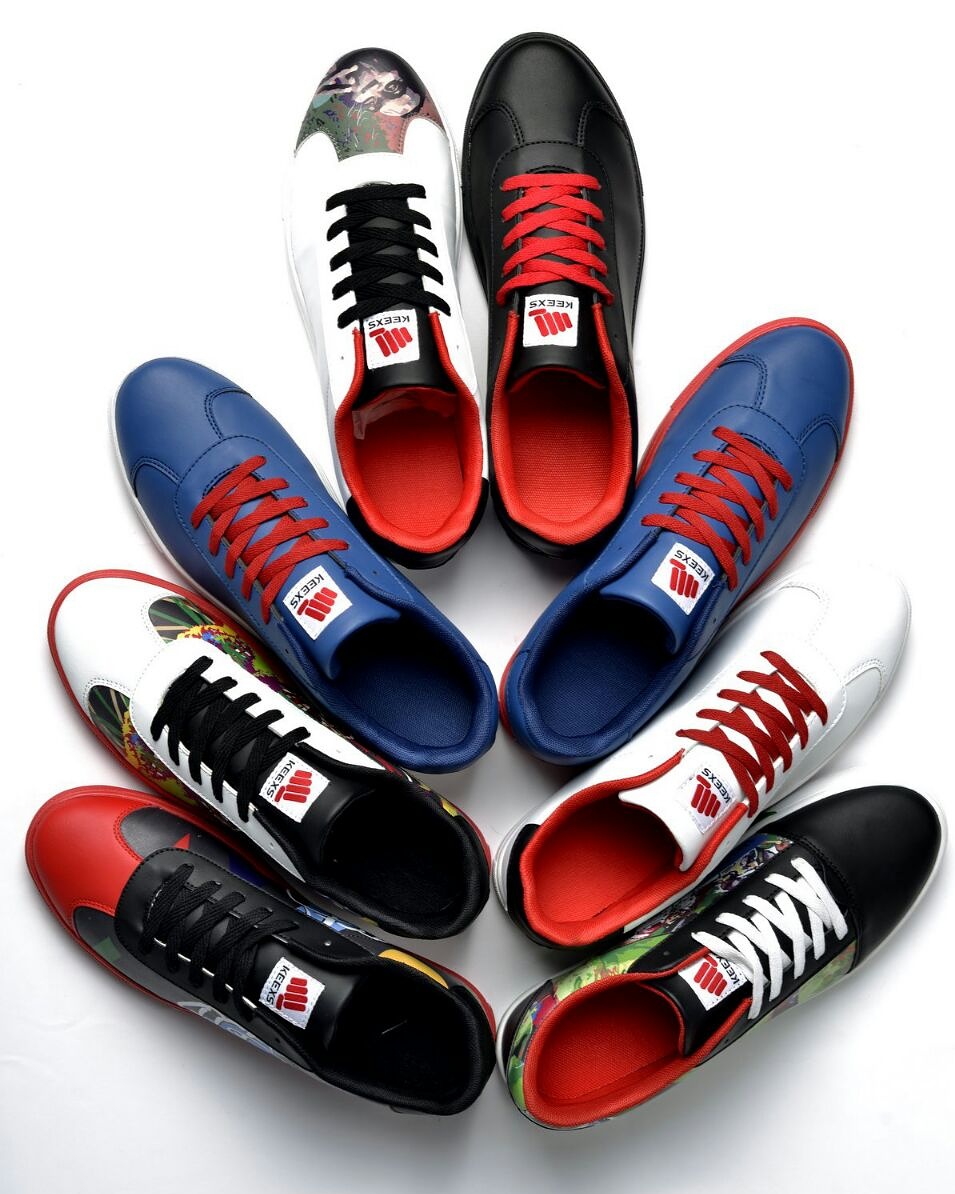
Nigerian entrepreneur launches country's first innovative and social oriented footwear brand

Pic courtesy Babajide Ipaye


From the moment he spoke I was hooked. I could see he had so much passion for his business. His deep voice filled the room. I knew at that moment, I wanted to tell the story of Nigerian entrepreneur Babajide Ipaye; the man behind the first innovative and social oriented footwear brand in Nigeria. Here I was seated at an event meant for Nigerian professionals to connect and exchange entrepreneurial ideas with professionals living in the diaspora. A friend had invited me to the event organised by Think Africa during the festive season and I told myself, I'm not an entrepreneur but there are lots to be gained from other fields so just go and listen to other people talk. Although they started three hours late, I forgave them as soon as the event commenced. It was well worth my time. As I listened to Babajide speak about how he started the sneakers brand and how far they have come, I was proud.
At the age of 8, Babajide had started wearing his father's shoes. At a young age of 18 he realised he could not find his shoe size in the market. Babajide Ipaye is now the founder of Keexs, an up and coming social and innovative footwear company. Nigeria's current economic growth is prompting young creative entrepreneurs to seek alternative ways of creating employment for themselves. For entrepreneurs like Babajide, a better economy would mean ensuring the manufacturing industry in Nigeria thrives, giving opportunity to many Nigerians who are unemployed.
Over 20,000 U.S. dollars was raised through crowd funding in 2015 to establish the start-up company while he was studying shoe making in the Netherlands.
With its bold colours of red, green, black and white; and a Fela inspired design on one of the collections, the sneakers have become an instant eye-catcher for many. The company has a technical partnership in the Netherlands where the shoes are produced.
In eight months, they have been able to sell 1,500 pairs. Babajide is optimistic that with the right funding and support from Nigerians, the brand will grow to the point of manufacturing the sneakers locally. The sneakers are currently priced at 59 U.S. dollars(18,000 naira) and are being sold at some stores across Nigeria's Lagos. Babajide currently produces 1,000 pairs of sneakers on a quarterly basis. The young entrepreneur is looking to attract more investors to expand his business.
I sure learnt a lot of things that day.
Also, producing the story was a reminder that sometimes some stories are not just out there for one to see. We search tirelessly on social media for stories but some are hidden. 

Monday, 12 December 2016

DEMOLITIONS IN NIGERIA'S LAGOS.... A NIGHTMARE FOR MANY RESIDENTS


It had taken me a short time to decide to visit Otodo Gbame community in Nigeria's Lagos. The community exists side by side with a luxury estate in Lekki. The first time I heard of the community, I was at work. My bureau chief sauntered towards me. 'Demolitions were ongoing somewhere in Lekki'. He showed me video clips that had been posted online. I quickly dismissed it. We had filmed a lot of of ongoing demolitions in Lagos. We waited for weeks to interview the commissioner of information but that didn't happen, making the story not to see the light of day. As the day progressed, Text was keen to get some colour so I decided to stop by on my way home. Worst case scenario, it would be a personal adventure if they chose not to use it.
As I approached the community, we realised the car could not go further. I alighted and asked some questions. There was water two streets down and the car could not get past that point as the roads were in a terrible state. I could see the residents from afar carrying their belongings on their heads. As they got close, a sullen look was on their faces. So much despair. Dissatisfied with the answers I got, I made a quick decision. I needed to see for myself. I quickly calculated. I had no rain boots and taking a motorcycle in there was a risk. From experience, I could end up been thrown into the muddy water. I returned to the car. I was grateful the windows were tinted. I changed from my office looking clothes to a top and jeggings. I needed to have the girl next door look cos I had been told to expect some hostility. That done, I got out, took off my shoes and got a local resident who lived close-by to accompany me. I needed someone who could easily persuade them to talk and I also needed a back-up for when things got heated. 
As we walked the 10 minutes distance into the community, my escort threw more light on what had happened. A Yoruba resident and Egun resident had fought over a girl. The two groups, Yoruba and Egun people from Benin Republic ended up fighting and two days after, bulldozers were sent in to raze down the slum. Thousands had been displaced as a result.
Spokeswoman for Lagos police denied the claims saying they had arrested several people for setting fire to the shanties. 
As we got close, I could see some makeshift houses still burning. Some were still standing in the distance towards the water. People were scampering through the wreckage to salvage what was left of their property. I tried to take some pictures but was warned not to. I quickly put my phone away after I took a few.
Looking at what was left of the thriving community, so many questions raced through my mind. What would happen to the residents now? Where do they go from here. They had become victims. The only home they had or knew had been demolished. I braced up to interview some of them. They told me point blank they had nowhere to go. This was their home. It had been for decades. As they struggled to grapple with their new reality, I struggled to contain my emotions. Bulldozers escorted by police arrived to raze the traditional housing residents said. Many residents who were at work at the time the demolitions started were unable to gather their properties from the scene. About 5 people died when their boat capsized while in a hurry to escape the trigger happy policemen.
The following week, we went back to film. This time, we had someone from a rights group escort us in. The residents were more receptive. Families hung around in makeshift sheds. They had nowhere to go, they said repeatedly. The case was ongoing in court and all they had was hope.
This was not the only community to experience demolitions in Lagos. Few months ago, shops and shanties in Jakande experienced same fate. I and my colleagues had visited the scene while demolitions were ongoing. As we set our camera to film, a convoy of security vehicles drove in. More than a dozen policemen jumped down and some walked towards us. I held my breathe and prayed silently. A few started shouting at us but one of them calmed them down and told us to go on filming. I sighed in relief. All the shops along the street leading to Lekki beach were razed down. A colleague mentioned last week that all the girls who used to live there had relocated to Ajah.
London-based Amnesty International recently called on Nigeria to shelve plans to demolish more illegal settlements in the megacity of 23 million, and said officials needed to provide alternative accommodation for residents. A U.N. expert has also asked Nigeria for urgent information about a forced eviction of thousands of people from makeshift homes in Lagos.
Slums of makeshift housing are common in the poorest parts of Lagos, a city of 23 million people, which attracts thousands of people each day in search of work from across Africa's most populous nation and neighbouring countries.
Weeks after we had filmed, I got a call from a co-director of one of the rights groups. The police are back in Otodo Gbame she said. My heart sank. Can you send a crew? I had to turn her down. We were done with the story but my heart went out to them.
The demolitions have become a nightmare for many and all they can do is cling to hope. One of the victims said: ''this is not the change we voted for''.

Video links: Lagos waterfront communities protest demolitions (Watch from 4:15)
Lagos communities protest mass eviction order by state officials


Friday, 11 November 2016

NIGERIANS RIDE THE WAVE AS SURFING BECOMES POPULAR IN LAGOS


Living in Lagos Nigeria is like listening to non-stop music. Sometimes the music is hard like rock and sometimes soft like jazz. It can make you laugh or cry. There is never too little drama or too much quietness. It's everything and nothing imagined unless experienced. For over five years, the city has continuously provided never ending stories. More than any other state in the country. And I just love it. You can get caught up in all the noisiness of the traffic during the week, dance non-stop at the club on weekends or just decide you need to escape to some quiet beach, close your eyes and for some hours forget you are still in Lagos. But if you decide quiet is not your thing and you want to take in the sounds and sight, then that's fine. Lagos can be anything you want it to be. Evidently seen with the Eko Atlantic project; new coastal city being built on reclaimed land. I managed to catch a glimpse of the ongoing work recently but that's a story for another day. Today is about an interesting sport that is gradually becoming popular in Lagos. Surfing.
The first time I came across the story online, I knew instantly it was a story we needed to do. I could just imagine watching the story on television-the end result. That's always the starting point for me. How would the story play out on television? That's what I think of when a story idea comes to mind.
The process involved in arranging the shoot was a short one. The stars were aligned in our favour I would say if one considers the challenges sometimes faced in pinning down people for interviews. Thanks to one of my go-to persons for contacts, this was an easy deal. Godpower Pekipuma, fast rising surfer was our man for the day and he was more than willing to take us through the entire process despite partying late into the night the previous day.The only hitch was trying to get a boat to Tarkwa Bay, the location for surfers in Lagos. The boat drivers argued for over an hour. They all wanted to take us. No surprises there. With the present economic situation in Nigeria, many people are really struggling. Thankfully all was resolved and we were well on our way to the beach.
Why Tarkwa Bay for surfing? The reason was simple. I had been told years back by a friend the first time I witnessed surfing live that the water at Tarkwa Bay was just perfect for surfing. The man-made shipping inlets helped to create naturalistic swells. At the time I had been worried sick with the idea that he might just drown. This time around I was excited especially seeing young children surfing. They have high hopes of representing Nigeria at international competitions.
Like in many African countries, surfing is still a budding sport in Nigeria, but Pekipuma is hoping to change that. Growing up near Tarkwa Bay beach in Nigeria's commercial capital Lagos, Pekipuma used to spend hours playing on the beach. He knew nothing about surfing, but later became curious after watching a movie about the water sport as a little boy. Now with 15 years of experience surfing, Pekipuma has started a training program for young people, charging 5,000 naira (16 US dollars) per hour for those without surfboards, and 3,000 naira (9 US dollars) for those who come with their own boards.
Pekipuma says interest and popularity in the sport has grown in recent years, attracting both young and old.
The young surfer says surfing still has a long way to go in Nigeria, lack of equipment like surfboards in the country already keeps many away from the sport.
I had absolutely no regrets at the end of the day. Wait. I did have one. Just one. My phone totally disappointed me. I was unable to take any pictures but do check out the video in the link below.

Have a great weekend!


Tuesday, 30 August 2016

Nigerian entrepreneur turns trash to cash


Nigeria's megacity Lagos has always had waste in abundance. This is no surprise owing to the millions of people who live in the sprawling city.
Wecyclers, a waste gathering and processing company is giving communities a way out of this urban challenge by providing a reliable supply of materials to local recycling companies.
Wecyclers works with low income households collecting their trash and giving then redeemable points in exchange.
What started in 2012 as a social enterprise initiative has grown to enlist 11,000 homes across Lagos suburbs.
Bilikiss Adebiyi-Abiola, the chief executive officer of Wecyclers had always wanted to build a network that would see residents in communities get rewarded for their work.
At her factory in Lagos, plastic bottles, cans, cartons, and nylons are collated and processed or crushed before they are bagged and sent to local recycling companies who use the materials for manufacturing.
"We are making it easier, we are making the environment cleaner and we are helping to you know reduce the pressure on our land fields because our land fields are filling up, we are reducing CO2 emissions, we are making ehmm you know we are helping to strengthen the economy because we are providing viable alternatives to virgin materials," the 34 year old said.
Wecyclers with the aid of team members who ride cargo-bikes collects at least 100 tonnes of wastes monthly.The company says it is yet to process at full capacity because of erratic electricity supply in the country.
Chronic power shortages are one of the biggest constraints on investment and growth in Africa's largest economy, an issue the government says it is working to fix.

Pictures courtesy: Akintunde Akinleye


Nigerian entrepreneur fuses fashion and culture to bring out trendy shoe line


As Nigeria continues to look for ways to diversify its economy away from its reliance on crude oil, fashion entrepreneur Tunde Owolabi is keying into the country's vibrant style with new fashion pieces that incorporates local fabrics.
Nigeria's economy the largest in Africa is going through its worst crisis in years and Tunde Owolabi believes that broadening the appeal with fashion products that appeal to stores beyond the African continent will help boost the economy.
The young entrepreneur produces fashion pieces with aso-oke, hand loomed cloth woven by residents in Western Nigeria.
In one year, Tunde Owolabi has become a well known name in fashion circles with his collection of aso-oke shoes and accessories.
Inspired by culture, the 38 year old is seeking to promote Africa's contemporary fashion landscape with afro-centric fashion accessories, sneakers, boot and sandals all handmade from aso-oke.
The founder and creative director of Ethnik spends months creating the fashion pieces with his team.
He says it is important to push for reforms that will see Nigeria tap into other areas that will reduce its reliance on oil.
"Starting now makes me understand what I'm doing and you know the challenges are great but if at this difficult time I can overcome the challenges, by the time things get better then we will be smiling you know because now Nigeria is looking into manufacturing with the fall in oil prices and all and there can't be a better time to be an entrepreneur because now we have to look inwards, find new means of making money, find new means of getting things done and helping the country to prosper as opposed to oil," the fashion entrepreneur said.
The multimedia artist has invested over 3 million naira(11,764 U.S. dollars) into the business and has profited over 5 million naira(19,607 U.S. dollars) from the sales of over 700 fashion pieces.
With a current staff of 6 people, Tunde says he is looking to employ young designers to create designs for the shoes and fabrics.
He says the industry is not without its challenges but hopes to one day break into the mainstream fashion market.
"We need to keep our fit on the ground properly, you know when we've overcome the hurdle of manufacturing because it's still bit of a puzzle for us; sometimes you get the materials, sometimes you don't you know and then you have to start to looking for alternatives and how to balance it out but once we are able to cross that hurdle and we know that we can get the kind of materials we want readily available to us without breaking the bank then we can start to produce things that will rival the international market because the advantage they have is, they have dedicated people one, they have the materials available to them and they have the financial backing," Tunde said.

Pictures courtesy: Sharon Ogunleye


Wednesday, 10 August 2016

Nigerian chefs transform meals to culinary delights


For months now there has been a renewed buzz for Nigerian food. Chefs all over the country are taking daunting steps and creating new recipes made with Nigerian ingredients. Gone are the days where garri(cassava flakes) was just made for eba or drank with water, sugar and milk. It's a whole new world for culinary exploration for us and I am loving every bit of it. I'm not sitting back either. The chefs alone cannot enjoy alone. I have started my own journey and for those with open minds, I encourage you to do same. 
Few weeks ago, I stepped into Nigerian chef, Uzor Orimalade's garden and I was wowed. Uzor used to be in the corporate world; switching careers from management consulting to investment banking until she finally decided to pursue her passion for baking and cooking. She has not looked back ever since she set up her company Uzo's Food Labs, a small haven that has its own garden where she grows all sorts of vegetables in little pots. The chef who is very passionate about the concept from 'garden to table Nigeria' is a gardener experimenting with growing a wide range of vegetables and creating recipes from her harvests.
In Uzor's garden, one can find tomatoes, black truffle tomatoes, cherry bomb pepper, green bell, brussel sprouts, lemon cucumber, ginger and a lot of other Nigerian and foreign vegetables.
The female entrepreneur says combining Nigerian and foreign ingredients in preparing meals is the future of Nigerian food. 
A culinary explosion of Nigerian food helped by some Nigerian chefs is making traditional recipes more attractive for residents in the country. This new wave of innovative food is being referred to as the new Nigerian kitchen.
"The new Nigerian kitchen that we see a lot of now that is championed by someone that I really really like, Ozoz, integrates other elements from other cuisines into our Nigerian food so by having a garden like this with things like basal and lime basal and the foreign egg plant, we can integrate that into Nigerian food and it will be seamless and I think that's actually the key to opening Nigerian food up to the international pallet, a lot of the problem I think has been the presentation of Nigerian food and the 'conkness' which isn't necessarily bad but let's face it, you need to water things down or make Nigerian food a little more acceptable to the pallets of the foreigners and by doing that you can just integrate some things that they are familiar with and then it almost seems like it now goes from Nigerian food to world cuisine," Uzor said.
Groundbreaking chef, Ozoz Sokoh is on a quest to find the soul of Nigerian food which could provide inspiration for future food inventions from the West African country. Based in Nigeria's commercial capital, Ozoz has over the years grown to become known for transforming Nigerian meals into delightful culinary adventures. From her home in Lagos, Ozoz is one of the many chefs without a restaurant that is reshaping Nigerian food with creative cuisines.
Ozoz says she hopes the new Nigerian kitchen inspires a desired change in Nigeria's food industry.
"I hope that it changes what Nigerians at home eat. I hope that it also influences what is served in Nigerian restaurants at home and abroad and I think more importantly is I hope that it inspires and creates a generation of small and medium entrepreneurs who create products that are exportable, that are shelf stable products that can be you know, that can be used in restaurants that can be sold at home and abroad," the Nigerian chef who fell in love with food at a young age said.
I tasted Ozoz's agbalumo juice and gosh..... it tasted so divine. Never in my wildest imagination did I think it would turn out like that. Thanks to Ozoz for being so patient with the team.
Companies are keying in too. Nigerians were treated to gastronomic delights at a recent food and drink fair held by Guaranty Trust bank. The 2-day event was designed to showcase Nigeria's emerging food industry and had notable chefs hosting culinary classes to hundreds of participants from all over the country. The chefs demonstrated to food enthusiasts how to prepare modern twists to Nigerian cuisine and were allowed to satisfy their taste buds after each class.
The organizers hope that this kick-starts the beginning of a revival in Nigeria's food industry.


Ozoz teaching participants how to make different food and drinks with pawpaw


Ozoz(right)


Tuesday, 14 June 2016

Bringing ballet to Nigeria


Hidden in Nigeria's commercial city is a dance school aiming to make contemporary forms of dance an integral part of the country's rich dance culture.
Nigeria's dance culture, inspired by folklore and other African forms of music has evolved over the years and given way to new dance forms that have become popular and graced videos of music stars across the African continent.
Since losing seven members of her family in a plane crash years back, Sarah Boulos, a Lebanese-Nigerian was inspired to set up The Society For The Performing Arts in Nigeria(SPAN) in 2004.
The school which started with an investment of 750,000 naira (3,768 U.S. dollars) in a garage at her home has grown to occupy its own space at a community centre located in the business district of Lagos.
Sarah Boulos believes she and her dancers are slowly winning over audiences.
"We have a very well received audience when it comes to dance and even when it comes to music with dance, so we're very excited about that. Nigerian community is very open minded because they are starting to love that SPAN is part of Lagos, SPAN is part of Nigeria, SPAN has raised children, Nigerian children to become successful to open bank accounts and have families so when we have a SPAN event, they will come and they will watch and they will enjoy," the 46 year old said.
Since the dance school was established, they have trained over 100 students and supported hundreds in their professional field; partnering with over 100 non-governmental organisations while providing on a yearly basis over 30 jobs in the entertainment industry.
Ballet dancer, Abimbola Fakiya teaches ballet at a school in Lagos.
The dancer who also loves dancing hip-hop says what initially started as a foreign dance to him has turned out to be another medium of communication.
"We saw it a lot on TV and we looked at it like something that probably could not be taught to us because we thought it like a white man dance or probably something they just, it's their culture and all that because we have our culture and our own kind of dance style but when I came to SPAN and I actually had to learn ballet it actually taught me that it's not just about culture because dance is a language and you can speak it to anyone even if you don't speak English you can speak dance and ballet is one of those dance languages that when you speak out people hear it and when you learn something like ballet it helps your body,"
Twelve-year-old, Alexis Kentebe is one of the younger performers. She says she enjoys other forms of dance but ballet is her first love.
"I don't really do anything else without ballet, sometimes I maybe may do a little hip-hop in my room sometimes by myself but Nigerian dance I find it, it's very interesting and it has those loud and how do I say it, it comes out to people and it makes people smile when people dance the Nigerian culture of dancing,"
Sarah says most students from SPAN do not get jobs if they are unable to teach ballet as schools and institutions acknowledge already known dance forms but embrace diversity of all dance forms especially ballet.
"There is a reality factor, I have not pushed it. It happens to be this way, it happens that schools have identified the need of using ballet as a technique to develop the child for his motricity, for his brain activities, for everything so that is why that technique that is simplified for children is allowing people to make a living out of it,"
The founder of SPAN says her aim was to build a sole performing centre unifying all forms of dances, artistes and all areas of performing arts.
Sarah says it has been a challenging journey but her efforts over the years to evolutionise the dance scene in Nigeria has paid off.
"First thing that I called were my friends and I told them I wanted to do an academy and I wanted to build a centre for Nigeria and I visited all the bankers of my company and they laughed because they were telling me what am I talking about? At the time performing arts was not that recognized or valued and I spoke about dance and I wanted to do academy of dance first so it was very difficult for me, the challenges was that I was not accepted."
Young hip hop dancers at SPAN have added ballet to their repertoire. They say the 16th century dance form has made them stronger performers and enhanced their creativity. 

Pictures courtesy Ejiro Edhughoro

Link to the video: