Things I Worked On

Things I Worked On
My Content Stream

Pages

Tuesday, 1 March 2016

Nigerians work to boost dairy sector amid challenges


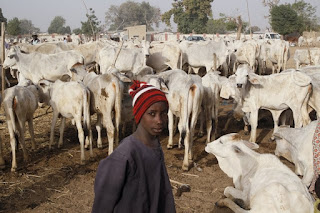
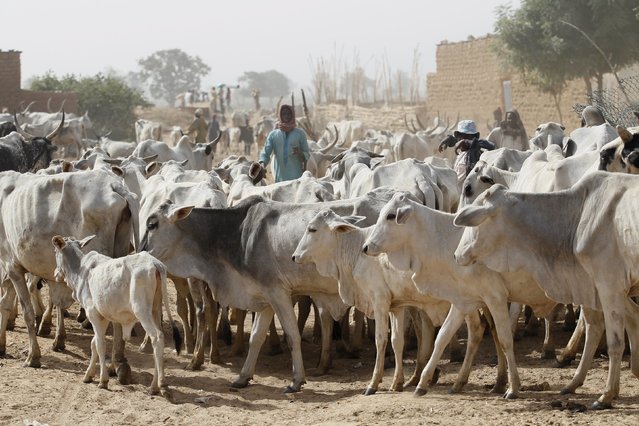
Nigeria's government is pushing more people to invest in the country's agriculture sector which was once a top source of employment in the 1960s. The country wants to diversify from oil reliance as well as ease the rising cost of living. In the north, one company is working to boost the dairy sector and promote locally made milk and yoghurt but faces stiff challenges.
Dairy processing has been declining over the years in Nigeria leaving just a few companies like L&Z still barely managing to stay afloat as they grapple with infrastructure challenges, and competition from the imported cheaper products.
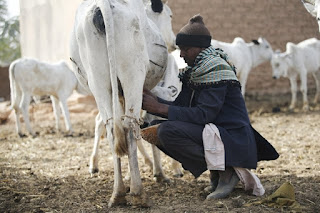
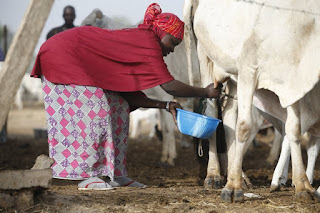
The L&Z factory was started in 2006 with a capital of about 1,200 dollars and targets Fulani cattle herders who bring in their milk for sale. Today it has grown to have a processing capacity of 20,000 litres of milk per day. The plant also processes yoghurt as well but officials says its been difficult trying to grow the business.
"We have the capacity to produce enough to feed not only Nigeria but the entire West African sub-region. What is lacking is harnessing the milk at the right quantity, the right quality, and delivering to the processing plant at the right time," said Muhammed Damakka Abubakar, the chief executive, L&Z Integrated Farms Limited.
Africa's dairy industry produced around 17 million tonnes of products in 2014, of which around 7 million were made from imported milk, according to the International Farm Comparison Network (IFCN), which promotes knowledge of global dairy.
Demand for milk in Africa is expected to grow sharply in the next decade due to population growth and rising incomes, leading to an increase both in production and imports.
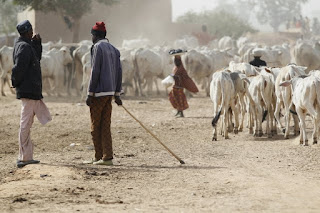
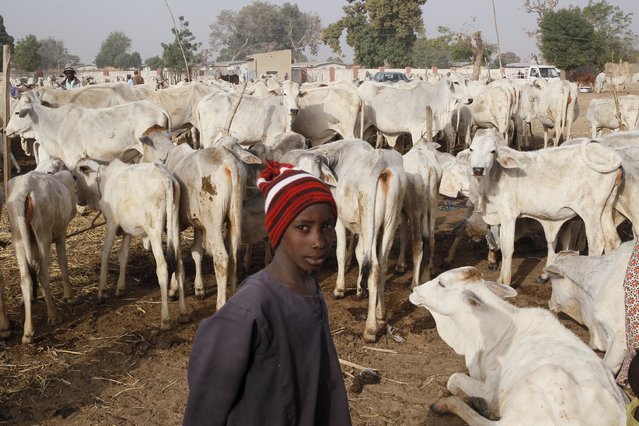
Nigeria's Fulani cattle herders supply most of the milk here. They are known to roam in search of pasture and water for their animals. Hundreds have been killed in the past in clashes pitting the cattle-herding and largely Muslim Fulani people against mostly Christian settled communities in Nigeria's volatile northeast.
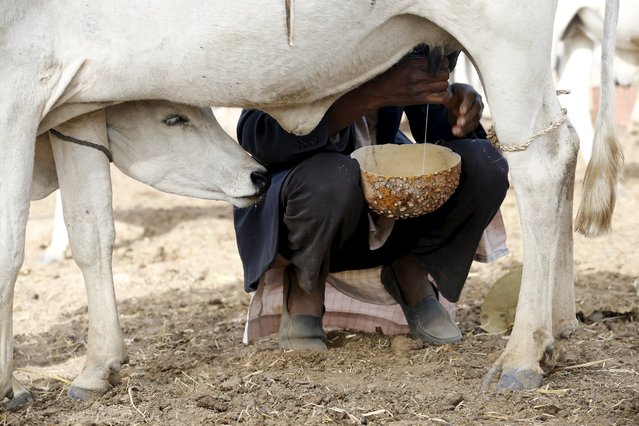
Most of them collect their milk in difficult conditions without proper facilities or equipment.
Fulani herders also note that poor grass quality has lead to low milk production, lack of storage and processing equipment and poor cooling facilities also hampers milk trade.
Lack of proper cooling systems make it impossible for proper milk storage and farmers often face losses.
To help farmers improve on their business L&Z now goes out to their homes to collect milk. Twice a week, they collect fresh milk, which is also tested before being weighed and purchased.
While more up-market areas have a ready market, poor infrastructure and transport networks also compound the cost of doing business.
Electricity access and machinery needed to improve efficiency remains unattainable for many farmers in the country. Power cuts often cause losses for many milk suppliers.
The power grid provides barely four hours of power a day.

Link to the video:

Pictures courtesy: Reuters/Akintunde Akinleye


Nigeria tomato processors faced with cheap imports and infrastructure challenges


Nigeria is Africa's second largest tomato producer with 1.5 million tonnes of tomatoes annually, yet 45 percent of the produce will often perish. Tomato processing factories in the country are working to secure the market and keep out cheap imports, but lack of adequate facilities is making it difficult to produce tomato paste, a staple in the West African nation.
At Erisco Foods Limited in Nigeria's commercial capital Lagos, tonnes of tomatoes are being processed into paste for sale in the country.
Established in 2008, the foods manufacturing company deals in various commodities and started its tomato processing line in 2011.
Erisco is among the few companies that manufacture tomato paste in Nigeria where they have had to compete with cheap imported brands that saturated the market for years.
Eric Umeofia, the chief executive of Erisco says he started the company with a capital of 75 million dollars. He says that doing business in the country is becoming more difficult every day.
Poor transport infrastructure, cheap imports and unreliable power supply are some of the major obstacles in the way of investors.
Umeofia says his factory wants to avoid wastage by processing surplus produce from farmers. But he would like to see the government support the business more.
Tomato paste is a key ingredient in many popular Nigerian dishes like jollof rice and tomato stew.
The country produces about 1.5 million tonnes of tomatoes annually of which 45 percent perish.
Transport is poor and Nigeria lacks facilities to produce the concentrate needed by factories making tomato paste.
Consumers spend 360 million US dollars on tomato paste imported from countries such as Italy and China.
The "Mile 12" market in Lagos, the biggest one stop tomato shop in West Africa has a daily turnover of about 1,500 metric tonnes of tomatoes.
Africa's biggest economy and top energy producer has also been hammered by low crude prices, since it relies on oil exports for around 70 percent of government revenues.
President Muhammadu Buhari, who took office last year, has said a strengthened agriculture sector would create jobs and reduce the reliance on costly food imports.
The inability of farmers to feed a nation of 170 million people has led to an increasing reliance on imported food in Nigeria.
Last year the government effectively banned the import of almost 700 goods to prevent a currency collapse and encourage local manufacturing, but analysts say many items listed are not available in Nigeria in sufficient volumes.

Link to the video:

Pictures courtesy: Angela Ukomadu


Friday, 5 February 2016

Nigerian company recycles plastic bottles into eco-friendly homes


In the northern state of Kaduna, the compound of a non-governmental organisation known as the Developmental Association for Renewable Energies (DARE) is littered with thousands of used plastic bottles.
Across Nigeria's cities and villages, waste including plastic bottles and other non-biodegradable materials, end up at dump-sites and landfills or on streets often clogging drains and waterways.
But DARE has found an innovative use for plastic bottles, building houses as part of a renewable energy project.
The bottles are first filled with sand and then arranged in rows and linked together with string and a mixture of cement and clay to hold them in place.
Yahaya Ahmed, an environmentalist and the chairman DARE says apart from helping to save the environment, the bottle houses will also solve some of Nigeria's housing problems.
With a population of nearly 170 million, majority of Nigerians live in poverty in shanty towns or in basic concrete block and iron-roofed houses they have built themselves.
"I think it is sustainable, we can really really recreate a lot of jobs for our many many youths who first of all have not had the opportunity of having very good education or even those who have their degrees and are unemployed. But those who are even below, we have a lot of them and such simple technology can really absorb a lot of them so that we have less and less idle youths on the streets," he explained.
For a two bedroom flat complete with kitchen, toilet and bath, about 14,700 bottles of 0.75 litres will be used.
Siiba Ahmed, bottle house builder has been building bottle homes for the last three years. He hopes to one day soon construct his own house for his family.
"Before I learnt this work, I was a photographer before. So this my brother invited me to come and learn this work so that I can improve. So I came here and used about six months to learn this work. So after that if he gets another contract he will call me. We will build another one at Zaria after this one. And after that we will go to Kano and build our own house. So I am the first person to build this type of building in Kano," said Ahmed.
The bottle houses are not only cheaper than the brick one but also better suited for Nigeria's hot climate.
Temperatures inside the house stay low because the sand insulates them from the heat.
The project also aims to provide jobs for many unemployed young people.
"I think it is sustainable, we can really really recreate a lot of jobs for our many many youths who first of all have not had the opportunity of having very good education or even those who have their degrees and are unemployed. But those who are even below, we have a lot of them and such simple technology can really absorb a lot of them so that we have less and less idle youths in the streets," said DARE Chairman, Yahaya Ahmed.
Sammail Ismail has lived in his own bottle house for almost three years now. His old house was made of wood and would collapse during the rainy season. He says the bottle house is much stronger.
"It is not comparable because for instance if you take one block of bottle brick, when you compare with a block...cement block, it can easily break the block but this one, if you take a hammer you cannot break it," he said.
To provide more affordable houses for Nigerians, DARE plans to build its first complete estate of 30 units of two to three bedroom flats.

Pictures courtesy Seun Sanni


Link to the video:
Nigerians turn disposable plastic bottles into affordable housing


Nigeria's once thriving industrial north waits for Buhari's revival plan

Local leather tannery

Nigeria's President Muhammadu Buhari wants to revive Kano's ancient trading hub and end the pattern of spending focused on exploring oil in the south. But despite the non-stop talk of diversifying the economy away from oil almost nothing has happened as the government has yet to unveil a strategy on how to rebuild industries such as leather which once thrived in Kano.
The decline of Kano is a showcase for the decades-long failure of authorities that enjoyed easy oil money to support its once booming leather and textile industries, which has left the Muslim north poor and helped Boko Haram recruit unemployed youth during its seven-year insurgency.
President Muhammadu Buhari, a Muslim northerner, wants to revive the former industrial heartland in the north and end the country's dependency on oil revenues, now dwindling due to a slump in crude prices.
The army has recaptured most of the northern territory lost initially to the jihadist group, which has allowed trade routes within Nigeria and its neighbours Chad, Niger and Cameroon to slowly reopen.
But despite non-stop talk of building up industries outside the oil sector, little has happened since Buhari got elected in March 2015 on a ticket to "fix" the West African nation hit by mismanagement and graft.
The government will only later this month unveil concrete plans to develop the country, leaving the few remaining entrepreneurs in the ghost-town like industrial park in Kano alone to deal with a severe economic crisis.
Businessmen see little room to expand with still chronic power and water shortages, which have crippled manufacturing for years.
The slow start of Buhari's administration has delayed a World Bank to help rebuild northern areas "liberated" from Boko Haram because authorities have been unable to tell its experts what they want them to do.
Dragging the north out of poverty is key to keeping disenchanted youth from joining Boko Haram that seeks to set up an Islamist state.

Pictures courtesy Seun Sanni


Wednesday, 6 January 2016

Budding Nigerian entrepreneur blazing a trail in agribusiness


Young Nigerian entrepreneur Affiong Williams is on the fast track to becoming one of Nigeria's young billionaires with her fruits processing company Reel Fruits. The company packages, brands and processes locally grown fruits. From producing the products in her home to now having a small factory, Affiong has grown the company to cater to many stores in Nigeria.


Pictures courtesy: Angela Ukomadu